
Introduction
Reliable water transportation requires piping systems that can handle pressure, resist damage, and deliver consistent performance over time. PVC-O pipes, also known as PVC-O pipes, are designed to address these requirements through a specialised manufacturing process called molecular orientation. This process enhances the physical and mechanical properties of conventional polyvinyl chloride (PVC), making PVC-O pipes suitable for various high-pressure water applications.
From potable water supply and irrigation to industrial water networks, PVC-O pipes offer a combination of strength, flexibility, and ease of handling. Understanding their features, applications, and selection criteria can help project planners, contractors, and buyers make informed decisions when choosing water supply pipes.
What Are PVC-O Pipes?
PVC-O stands for Molecularly Oriented Polyvinyl Chloride, commonly written as PVC-O. These pipes are manufactured by subjecting standard PVC to controlled conditions of temperature, pressure, and speed, which stretches the material and aligns its polymer molecules in a specific direction.
This molecular orientation improves important properties such as strength, toughness, flexibility, and impact resistance. Compared with conventional PVC pipes, PVC-O pipes can offer enhanced mechanical performance and crack resistance, depending on their design and manufacturing process.
Read More: 4 Advantages of Using Ready Mix Concrete (RMC) in Building
The orientation process helps create a pipe material that combines the inherent advantages of PVC with improved performance for demanding water transportation applications. However, the actual performance of a pipe depends on its pressure class, dimensions, applicable standards, and installation conditions.
Key Features of PVC-O Pipes
PVCO pipes are used in water infrastructure because of their combination of material properties and practical installation benefits. Here are some of their key characteristics.
1. High Strength and Impact Resistance
Molecular orientation improves the mechanical strength of PVC-O pipes. This helps them handle demanding water transportation conditions when the selected product is appropriate for the operating pressure. Their impact resistance can also help reduce the risk of damage during handling and installation.
2. Flexibility and Crack Resistance
PVC-O pipes offer improved flexibility and toughness compared with conventional PVC in suitable designs. These characteristics can help the piping system accommodate certain installation stresses and reduce vulnerability to cracking. Proper handling and installation remain essential for long-term performance.
3. Lightweight Construction
PVCO pipes can provide a favourable strength-to-weight balance, making them easier to handle than some heavier piping alternatives. Reduced handling effort can support more efficient installation, particularly in projects involving extensive pipe networks.
4. Corrosion Resistance
PVC-O is a non-metallic piping material that does not rust like conventional metal pipes. Its corrosion-resistant properties can be useful in water supply and irrigation networks, helping reduce concerns associated with metallic corrosion. Compatibility with the conveyed water and surrounding conditions should still be evaluated.
5. Water-Tight Joints
Suitable PVC-O jointing systems are designed to help prevent water leakage when correctly installed. Water-tight connections support efficient water transportation and can help minimise water loss and maintenance requirements.
6. High-Pressure Water Handling
PVC-O pipes are used in medium- and high-pressure water networks. Selecting the appropriate pressure class and following the manufacturer’s installation guidance are important to ensure the pipe system is suitable for its intended operating conditions.
Common Uses of PVC-O Pipes
The properties of PVC-O pipes make them relevant to several water infrastructure applications.
- Potable water supply: Used in water distribution networks where material suitability and water safety requirements must be considered.
- Irrigation systems: Suitable PVC-O products can support agricultural water transportation, including applications requiring pressure handling and durable piping.
- Pumping systems: Their strength and pressure-rated configurations make them relevant to water systems connected to pumping infrastructure.
- Fire-extinguishing networks: PVC-O pipes are used in certain fire-water applications, subject to project requirements, applicable standards, and fire-system approvals.
- Industrial water applications: They can be considered for industrial water transportation where the pipe’s material compatibility, pressure rating, and operating conditions meet project needs.
- The appropriate pipe material and configuration should always be selected according to the requirements of the specific installation.
Advantages of PVC-O Pipes
Choosing PVC-O pipes can provide several practical benefits for water infrastructure projects:
- Durability: Enhanced mechanical properties can support reliable performance under appropriate operating conditions.
- Ease of handling: Lightweight construction can simplify transportation and on-site installation.
- Installation efficiency: Suitable jointing systems and manageable pipe weight can help streamline installation work.
- Hydraulic performance: The internal characteristics of PVC-O pipes may support efficient water flow, depending on pipe dimensions and system design.
- Lower maintenance requirements: Corrosion resistance and properly sealed joints can help address common maintenance concerns.
- Long-term reliability: Selecting the correct pressure class, installing the pipes correctly, and following maintenance recommendations are essential for sustained performance.
- The suitability of PVCO pipes should be assessed against the requirements of the project rather than based on material benefits alone.
What to Consider When Choosing a PVCO Pipes Manufacturer
Selecting the right PVCO pipes manufacturer is an important step in planning a dependable water transportation system. Buyers should evaluate the following factors before finalising a product:
Applicable Standards and Material Quality
Check whether the manufacturer provides products manufactured according to relevant standards, such as those specified for PVC-O pipes. Material quality, manufacturing consistency, and product documentation should be reviewed to establish suitability for the intended application.
Pressure Ratings and Available Sizes
Select pipes based on the system’s operating pressure, expected conditions, and required dimensions. Confirm the available pressure classes and sizes with the manufacturer to ensure compatibility with the project design.
Manufacturing and Quality Control
Ask about production processes, product testing, and quality control procedures. Reliable documentation can help engineers and contractors verify whether the selected pipe meets the applicable technical requirements.
Application and Installation Support
Consider whether the pipes are suitable for potable water, irrigation, pumping, or industrial use. Installation instructions, jointing recommendations, technical assistance, and after-sales support can also help ensure that the system is installed and operated correctly.
Read More: The Role of Structural Steel Tubes in Modern Architecture
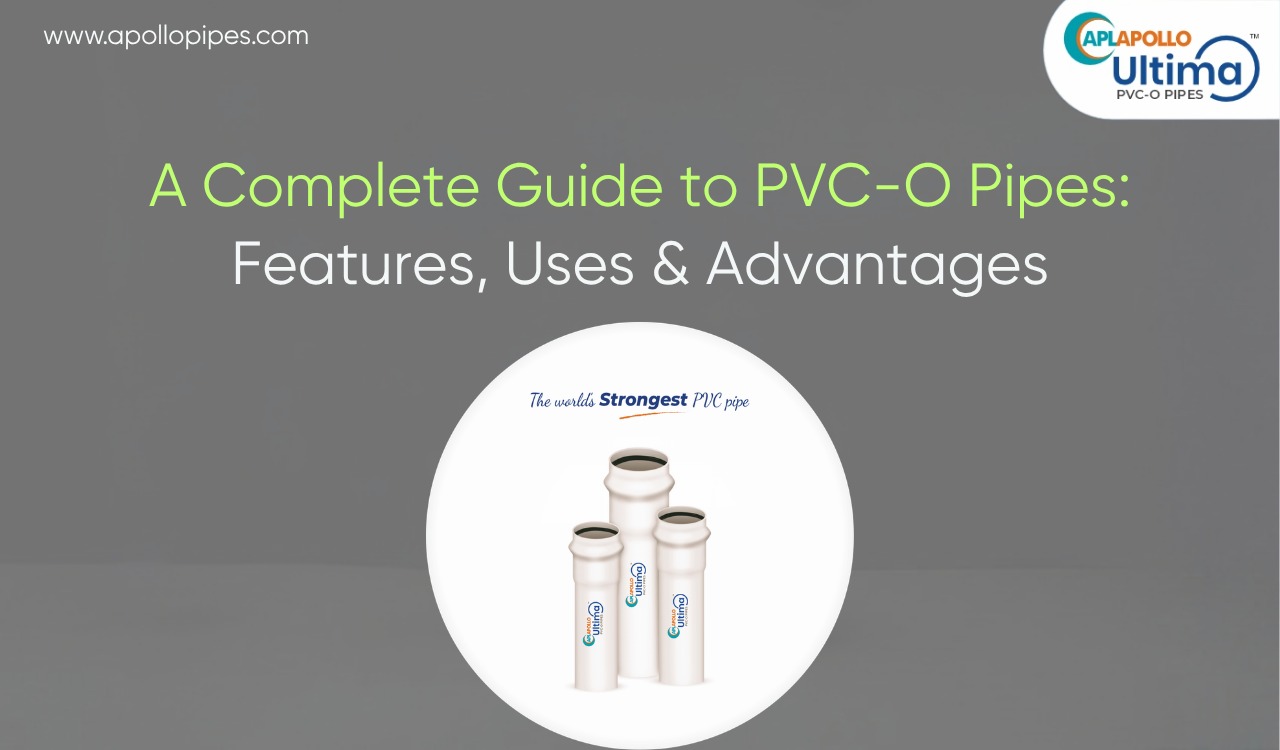
APL Apollo Ultima PVC-O Pipes
APL Apollo offers Ultima PVCO Pipes, designed for medium- and high-pressure water networks, including irrigation, potable water supply, fire-extinguishing systems, and pumping applications. The range is manufactured according to IS 16647:2017 and ISO 16422, with configurations including PVC-O 500 (C1.4), PVC-O 500 (C1.6), PVC-O 450 (C1.4), and PVC-O 450 (C1.6). The listed nominal pressure classes range from PN10 to PN25, depending on the configuration, while available pipe sizes are 90 mm to 400 mm.
APL Apollo highlights quality raw materials, world-class machining, a long life cycle, leak-proof joints, easier installation and maintenance, lighter weight without compromising strength, high-pressure water handling, and corrosion-free properties among the product features. As a PVC-O pipes manufacturer, APL Apollo provides the Ultima PVC-O range for projects requiring pressure-rated water transportation solutions. Buyers should refer to the official product documentation to confirm the specific configuration and requirements for their application.